Image courtesy of Dunkeld Community Archive
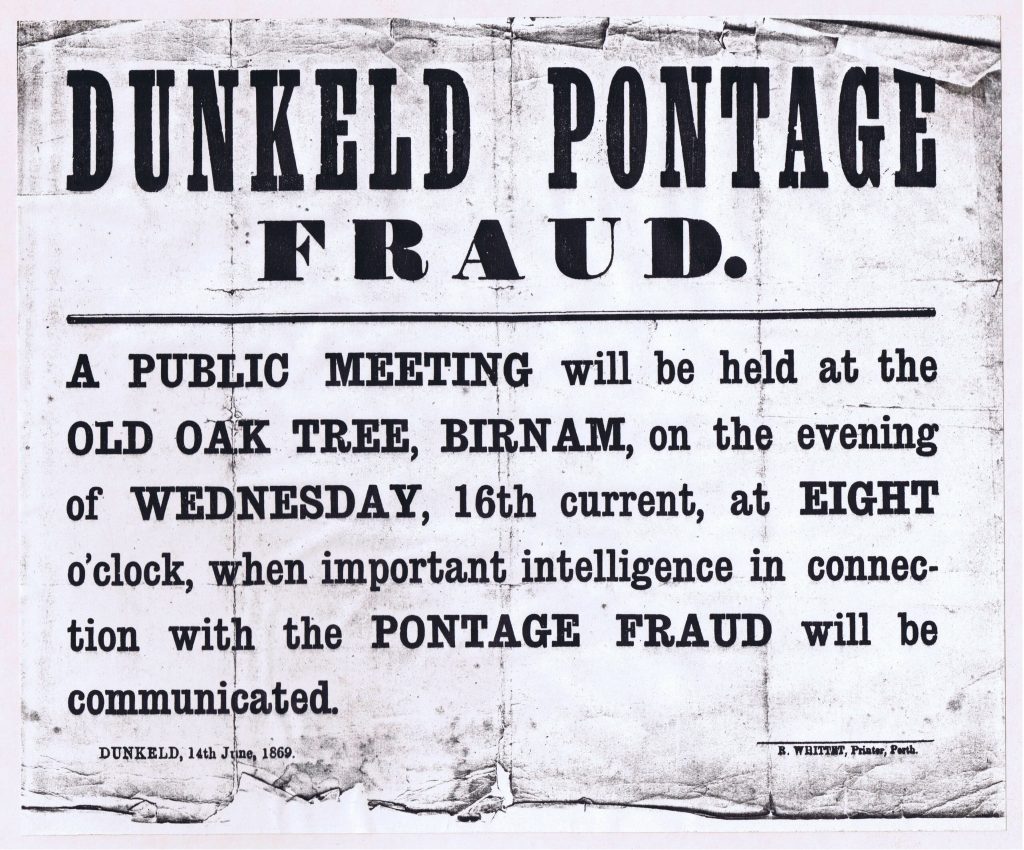
On our ‘Global Engagements’ page you can learn more about how people all over the world have used the idea of the moving Birnam Wood as a symbol of resistance, and the will to fight for positive change. The Birnam Oak also played a notable role in the 19th-century Birnam and Dunkeld Bridge Toll Riots, when organisers called a meeting at the tree to coordinate their efforts (this public notice is shown above). On our ‘Eco-heritage’ page, you can see an archival photo of the Oak taken just two years before this meeting occurred.
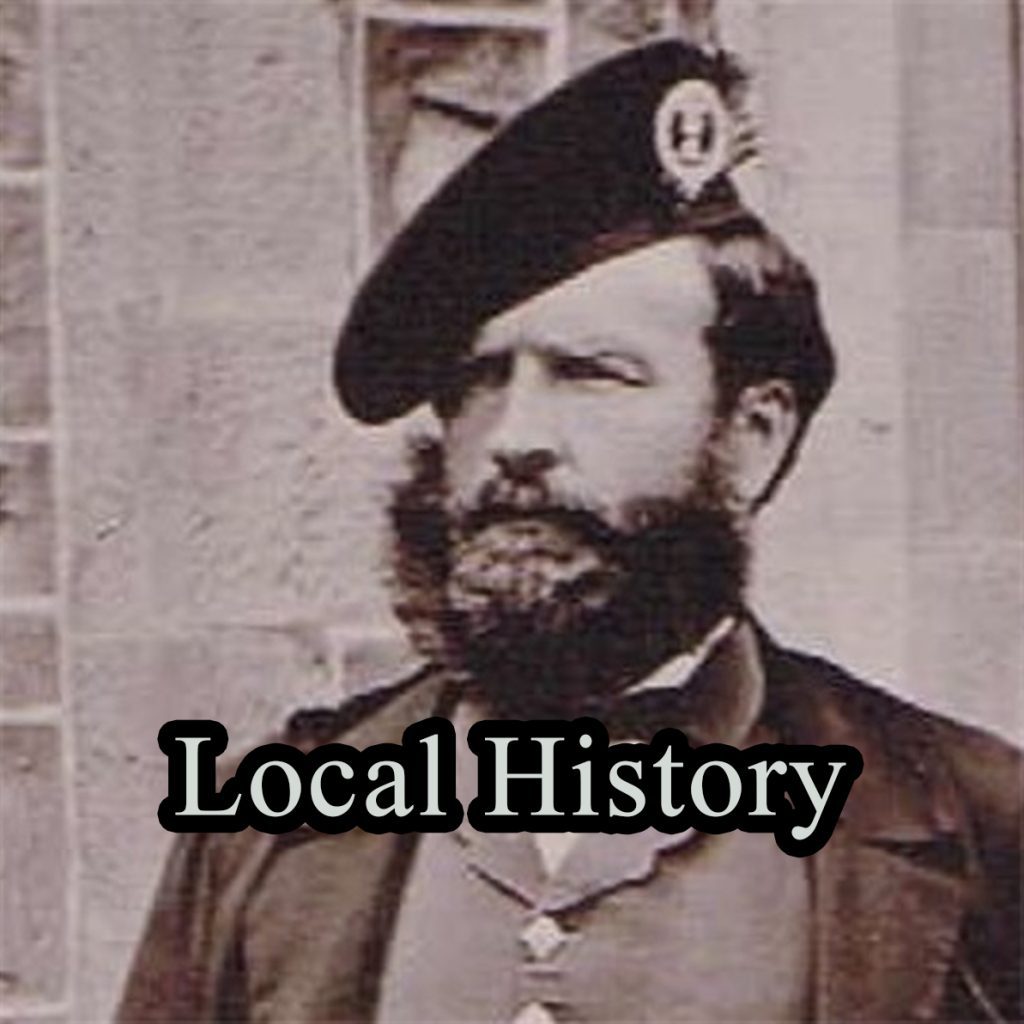
The roots of the Bridge Toll Riots began in 1808, when the Telford bridge opened for traffic. Tolls were levied to recoup the cost of construction (around £27,000), but by 1853, residents believed those costs had been recovered, and that tolling was now unjust. Alexander ‘Dundonnachie’ Robertson (pictured below) began campaigning for the toll to be abolished. Dundonnachie became the leading figure of the resulting Bridge Toll Riots, which involved acts of physical resistance (the repeated destruction and dismantling of the toll gates) and a prolonged legal battle. In 1878 the Roads and Bridges (Scotland) Act was passed, and came into effect the following year. The Telford Bridge toll gates were removed in 1879.
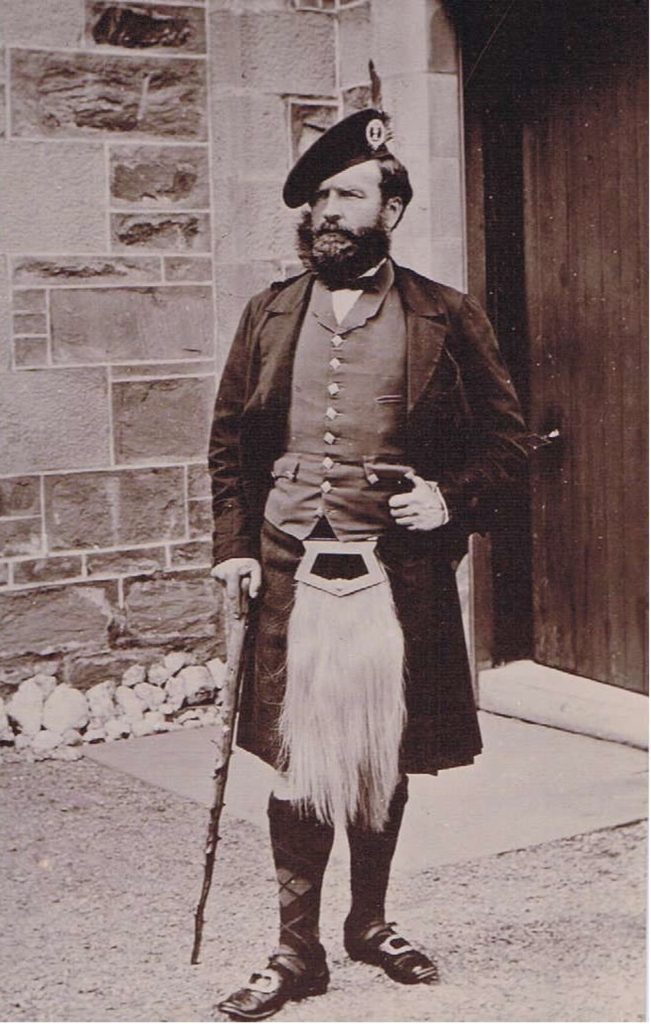
Image courtesy of Dunkeld Community Archive
You can learn more about the Bridge Toll Riots, and the rest of Dunkeld and Birnam’s rich local history by visiting the Dunkeld Community Archive and Chapter House Museum Trust. Our project is also keen to hear about other moments in Birnam and Dunkeld’s history that have involved the Oak. If you have a memory (big or small!) to contribute to the project archive, please contact us at
Please help us grow the project by taking a short survey here
Or, visit one of our other pages: