Did Shakespeare ever visit Scotland?
Maybe! The short answer is that there is no known evidence that conclusively proves (or disproves) that William Shakespeare ever visited Scotland. The evidence we do have, however, does suggest it’s possible.
In 1599 James VI asked Elizabeth I to send players to Edinburgh, and subsequently issued a licence to that group, permitting them to act in his court. The Lord High Treasurer’s Accounts and Acts of the Privy Council in 1599 also show payments to an unspecified number of ‘English comedians’ in October, November and December. That licence, and those payments, confirm that Elizabeth agreed to James’s request, and sent actors, who were then in residence in Edinburgh at the end of 1599.
Elizabeth I wasn’t patron of her own company, but may well have sent men from the most prestigious company working in London at the time, and a group who regularly performed for her: The Lord Chamberlain’s Men (Shakespeare’s company). The Lord Chamberlain’s Men are also explicitly named as performing at Elizabeth’s court on 26 December 1599 – so if they werealso in Scotland in December, they must have left in enough time to return to London by horse (at least 10 days).
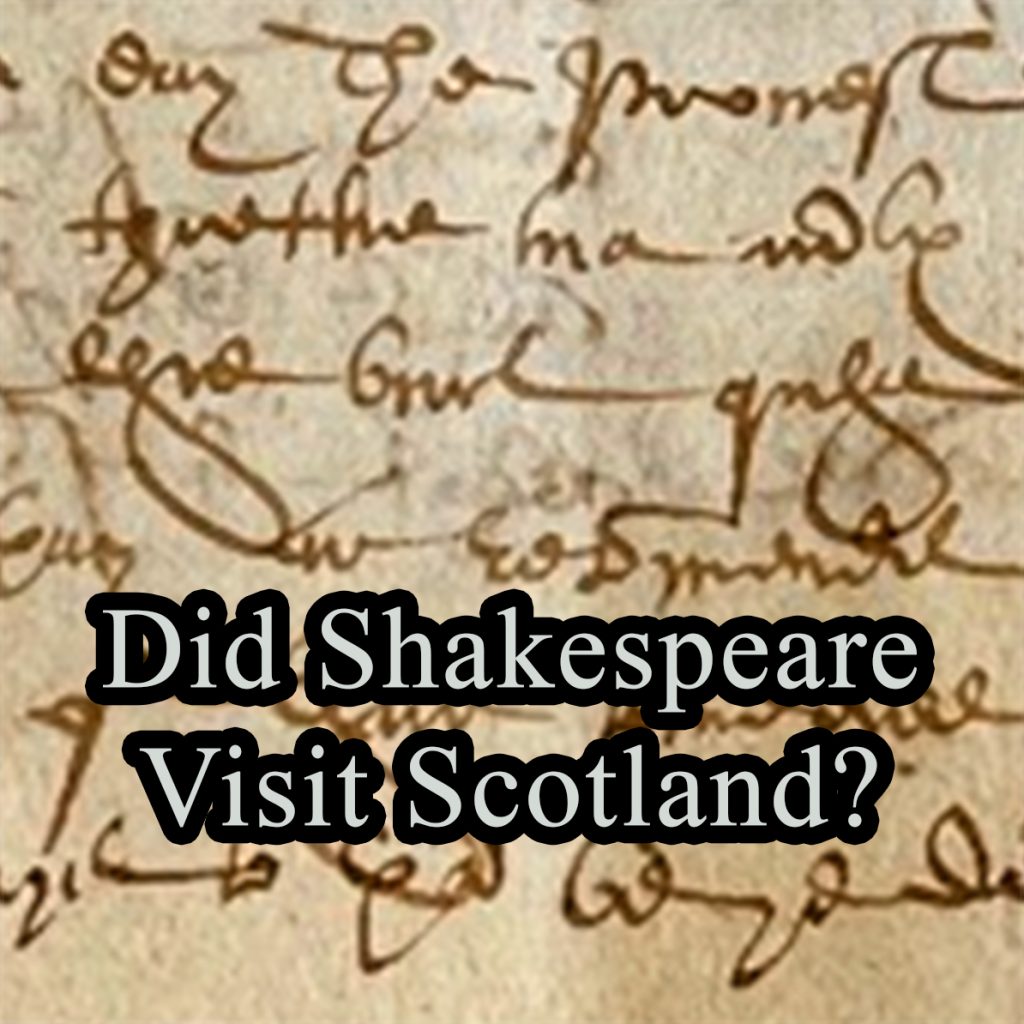
Registers of the Town Council of Aberdeen in 1601 give two further hints that those 1599 comedians belonged to Shakespeare’s company. First, the records show payments to the ‘king’s servants’ for playing ‘comedies and stage plays’, with the note that these players have been ‘recommended by his majesty’s special letter’.
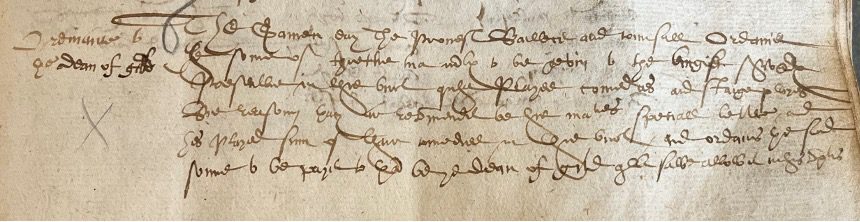
[Image credit: Aberdeen City and Aberdeenshire Archives, CA/1/1/39-40]
Records subsequently show Laurence Fletcher, ‘comedian to his majesty’ listed as a newly admitted burgess of the Guild of the burgh of Aberdeen.

[Image credit: Aberdeen City and Aberdeenshire Archives, CA/1/1/39-40]
Laurence Fletcher later appears in on another crucial document: the Privy Seal Warrant of 1603, that makes the Lord Chamberlain’s Men the King’s Men, under James VI/I. Fletcher is named first, and the second man named is William Shakespeare.
Fletcher’s appearance both in the Aberdeen documents and next to Shakespeare in the Privy Seal Warrant may suggest that the actors playing in Scotland – first in Edinburgh and later in Aberdeen, by James’s recommendation – were the same actors that James later lent his patronage to, when he succeeded Elizabeth. Even if we choose to read the evidence in this way, we can’t be sure that Shakespeare was amongst the actors who travelled to Scotland – but we can be certain that he knew and worked with people who had.
Please help us grow the project by taking a short survey here
Or, visit one of our other pages: